Showing posts with label Hank Cochran. Show all posts

Saturday, October 5, 2019

The Mavericks Cover Their Heroes and Inspirations on Nov. 1 Release of Play the Hits

Artist: The Mavericks
Album: Play the Hits
Label: Mono Mundo
Release date: November 1, 2019

“As musicians, you are always listening to other songs and you find inspiration and you talk about, ‘Oh man, one day we’re going to record this.’ But other things get in the way. You hear every reason in the world as to why not do a covers record, but now we’re in charge, so if we’re not going to do it now, when the hell are we going to?” The Mavericks lead singer Raul Malo told Rolling Stone. "You see those in the truck stops. ‘So-and-So Artist of Yesteryear Plays the Hits,’ and it’s some awful recording they were forced to do, and they’re selling for 3.99,” Malo laughs. “This is basically our version of that record, but hopefully with a little more care, and certainly more thought put into it.”

Three decades in, The Mavericks are as popular as ever, with a diverse and devoted following. Despite this covers album, they’ve refused to be a nostalgia act. “People come and yell for the newer songs,” enthuses longtime keyboardist Jerry Dale McFadden. Drummer and co-founder Paul Deakin has a perspective on the durability of the band: “The reason for our longevity is that we’ve been able to take control of the music we play, how we play it, and where and when we play it. We’ve made enough mistakes once, twice or three times, but now we run the show. We can keep the creative spark that’s so central to what we do.”

To celebrate their 30th anniversary, and pay tribute to artists and songs that have been part of the journey, the Mavericks give us a brand new album called Play the Hits, featuring songs they cut their teeth on, all made famous by other people, disassembled and totally reimagined by the Mavericks as a testament to how great the songs are and how the band can get inside the material and make it their own.

“The Mavericks in a way has been our experiment,” muses Raul. “It’s the ‘why not’ band. Why not just do it? It’s more fun that way. We’re not beholden to any one genre. We’re not beholden to anything. And you know, all it has to do is just sound good.” Yes, that’s about it.

Track listing and songwriter credits:

Swingin’ (John David Anderson, Lionel A Delmore)
Are You Sure Hank Done It This Way (Waylon Jennings)
Blame It On Your Heart (Harlan Howard, Kostas Lazarides)
Don’t You Ever Get Tired (Of Hurting Me) (Hank Cochran)
Before The Next Teardrop Falls (Vivian Keith, Ben Peters)
Hungry Heart (Bruce Springsteen)
Why Can’t She Be You (Hank Cochran)
Once Upon A Time (feat. Martina McBride) (Barney Ales, Dave Hamilton, Clarence Paul, William Stevenson)
Don’t Be Cruel (Otis Blackwell, Elvis Presley)
Blue Eyes Crying In The Rain (Fred Rose)
I’m Leaving It Up To You (Don Harris, Dewey Steven Terry) 

Monday, June 4, 2018

That Nashville Sound Monday Newsbytes: Willie Nelson, Krystal Keith, Rory Feek, Maggie Rose & More

Lots of new projects were unveiled over the weekend- many of which are new on the radar. So consider yourself first in on the know. It's like a little club. Except we don't have meetings and there are no dues.

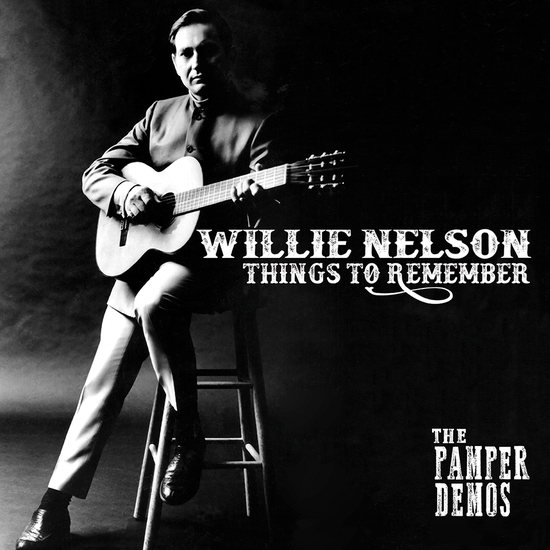
- A special collection of Willie Nelson's earliest demos is going to be made available through Real Gone Music with a double album called Things To Remember: The Pamper Demos. The project is scheduled for release on CD and digital platforms on July 13th. Here's the scoop on the project:
For the series of sessions that laid the foundation for Willie Nelson’s career and thus changed the course of modern country music, these recordings have been treated pretty cavalierly over the years. But first, a little history…Willie Nelson was a struggling songwriter, hungry for work and maybe even just plain hungry, when he moved to Nashville in late 1960 with his wife and kids and met Hank Cochran, who was a writer for Pamper Music. Pamper, which was owned by country star Ray Price, fiddle player Hal Smith, and a baker (!) from Pico Rivera, California named Claude Caviness, was the hottest publishing company in town, thanks to writers like Cochran and Harlan Howard and songs like “Heartaches by the Number” and “I Fall to Pieces.”
At first, Willie wasn’t going to sign with Pamper because Hal Smith wouldn’t give Willie the draw he needed, but Cochran told Smith to front Willie fifty bucks a week from his own draw. So Willie, determined to reward Cochran’s trust, got to work. “I was writing to prove I could write,” he said. “To get the money and feel like I was earning it.” He would end most work days with a new song, and then he and Cochran would call a session with A-team musicians who didn’t have major label studio work that day. The result: a body of work that just may well represent the most fertile creative period ever to issue from a country songwriter. The songs Willie recorded for Pamper during the early ‘60s remain among his most famous, and include tunes he still performs to this day: “Crazy,” “Funny (How Time Slips Away),’ “Night Life,” “Pretty Paper,” “Half a Man,” “Hello Walls,” “Healing Hands of Time,” and more.
And these, the Pamper demos, are the first recordings of those legendary songs. In other words, this is what artists and label guys back in the day heard when Hal Smith or Hank Cochran handed over a little acetate, and said, “Hey, listen here to what our guy Willie Nelson just come up with.” It simply doesn’t get much more historic than that! But, for some reason, these demos have hitherto turned up in bits and pieces, mostly on budget packages with little documentation or care. Now, finally, these incredibly important recordings are getting the respect they deserve. Things to Remember—The Pamper Demos brings together these 28 performances for the first time (several of which have hitherto eluded compilation), all remastered by Mike Milchner at SonicVision to sound much better than they ever have, and annotated by Grammy-winning writer Colin Escott, with photos courtesy of Bear Family label founder Richard Weize.
 - Sonia Leigh, former songwriter and tour-mate of Zac Brown and Eric Church, has a new live album coming out on June 15 called Live in London - Studio 3 Sessions.

- Maggie Rose has been releasing digital 45's damn-near every single month and they've been terrific. Her voice is one of the best in Nashville and each dual-track release has had her soulful style front and center. Her next one is being released on June 15 and features "Long Way To Go" and "Do Right By My Love." 

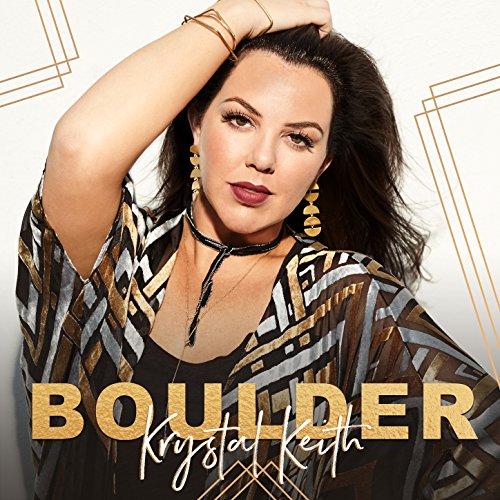
- Krystal Keith, daughter of Toby Keith, has a new EP coming out on July 13 called Boulder. The five track Show Dog label release features a duet with Lance Carpenter. Track list:
1. Boulder
2. I Got You
3. Anyone Else
4. Then It Started Raining
5. Resting Beach Face
 
- Big-voiced newcomer Dillon Carmichael has set August 17th as the release date for his debut album, Hell on an Angel. He's quietly released some fantastic independent work and according to Rolling Stone Country, "mixes some hard-nosed Outlaw country with the melodic edge of Southern rock.  The album's 10 tracks were recorded in Nashville's historic RCA Studio A by Grammy-winning producer Dave Cobb (Jason Isbell, Sturgill Simpson, Chris Stapleton). Seven of the songs were written or co-written by the young Kentucky native – a nephew of John Michael Montgomery and Montgomery Gentry's Eddie Montgomery – including the gritty title track and the previously released "It's Simple." Fellow singer-songwriters such as Jon Pardi and Leroy Powell also show up in the credits of Hell on an Angel, along with Carmichael's mother Becky Montgomery on "Hard on a Hangover.""
 
- Rory Feek released a final version of his film trailer for Josephine, a movie filmed with he and his cousin Aaron Carnahan based loosely on a true story that inspired a Joey+Rory song by the same name.
 
- Classic country songs are alive and well. William Michael Morgan proves such as with one of our favorite tracks of the year and an incredible track titled "The Last Monday in May."  Check out this video of him performing it with some veterans via Operation Song on the historic Grand Ole Opry stage on May 25, 2018.
 

Friday, November 11, 2016

A Veterans Day Salute To Those Country Artists That Served In The Military

K.F. Raizor, author of the website Raizor's Edge and the book We Can't Sing and We Ain't Funny: The World of Homer and Jethro is our guest writer today on That Nashville Sound. She's ever so gracious to provide wonderful tributes to honor those to whom the music we treasure just wouldn't be the same without. Thank you, K.F.

Kris Kristofferson - Army Ranger
Veterans Day originated as Armistice Day in 1938 to honor the "Great War" (what we now call World War I) veterans on the anniversary of the signing of the armistice ending the first world war (which occurred on November 11, 1918 at 11:00 a.m.).  In 1954 the name of the holiday was changed to "Veterans Day" to honor the veterans of both world wars as well as the Korean war and those who served in peacetime.

I annually publish this list of some of the members of the world of country and bluegrass music who served in the armed forces, and (if applicable) the war during which they served.  The list increases every year (sadly, usually by reading obituaries of singers who pass away).   It remains one of my most popular posts, for which I am very grateful. 

Here are the musicians in country, bluegrass, and country-rock that served in the military:

Army:

Jules Verne Allen (World War I)
Jack Anglin (World War II)
Bob Atcher (World War II)
Bobby Bare
Dr. Humphrey Bate (Spanish-American War)
Byron Berline
Pat Brady (World War II)
Rod Brasfield (World War II)
Jim Ed Brown
Tom Brumley
Horace "Aytchie" Burns (World War II)
Kenneth "Jethro" Burns (World War II)
Tommy Cash
Harold "Curly" Chalker
Hank Cochran
Earl Thomas Conley
Sonny Curtis
Tommy Duncan (World War II)
Jim Eanes (World War II)
Bob Ferguson (also served in the Marines)
John Fogerty
David Frizzell
Johnny Gimble
Jack Greene
Tom T. Hall
Bill Harrell
Esco Hankins (World War II)
Harold "Hawkshaw" Hawkins (World War II)
Red Hayes (World War II)
Henry "Homer" Haynes (World War II)
Fairley Holden (World War II)
Doyle Holly
Harlan Howard
Stonewall Jackson (primarily served in the Navy; briefly in Army but discharged after it was discovered he lied about his age)
Sonny James (Korea)
Louis "Grandpa" Jones (World War II)
Doug Kershaw
Rusty Kershaw
Bradley Kincaid (World War I)
Kris Kristofferson
John Lair
Darrell ("Pee Wee") Lambert (World War II)
Charlie Louvin (Korea; was in the Army Air Corps during WW II)
Ira Louvin (World War II)
Joe Maphis (World War II)
Darrell McCall
Del McCoury
Skeets McDonald
Jesse McReynolds (Korea)
Jim McReynolds (Korea)
Homer "Slim" Miller (World War I)
Roger Miller (Korea)
Hubert "Buster" Moore
George Morgan
"Colonel" Tom Parker
Les Paul (World War II)
Lloyd Perryman (World War II)
Webb Pierce
Elvis Presley
Charley Pride
John Prine
Boots Randolph
Jerry Reed
Don Reno (World War II)
J.P. "The Big Bopper" Richardson
John Shuffler (Korea)
Shel Silverstein
Arthur "Red" Smiley (World War II)
Cal Smith
James "Hal" Smith (World War II)
Carl Sprague
Ralph Stanley (World War II)
Jack Stapp (World War II)
John Starling
Henry "Redd" Stewart (World War II)
George Strait
Nat Stuckey (Korea)
Robert "Tut" Taylor (World War II) (also served in the Navy)
Floyd Tillman
Conway Twitty
T. Texas Tyler (David Myrick) (World War II)
Leroy Van Dyke
Charlie Walker (World War II)
Roland White
Doyle Wilburn (Korea)
Teddy Wilburn (Korea)
Don Williams
Bob Wills (World War II)
Faron Young

Navy:

Hoyt Axton
Kenny Baker (World War II)
Archie Campbell (World War II)
Jerry Clower
Cy Coben (World War II)
Larry Cordle
Alton Delmore (World War II)
Roy Drusky
Bill Emerson
Leon Everette
Werly Fairburn (World War II)
Benjamin "Whitey" Ford (Duke of Paducah) (World War I)
Howdy Forrester (World War II)
Claude Gray (Korea)
Buddy Harman
Ferlin Husky (Merchant Marines) (World War II)
Harold "Shot" Jackson
Stonewall Jackson (also briefly served in the Army but was discharged after it was discovered he lied about his age to enlist)
Mitch Jayne (World War II)
Claude King (World War II)
Doyle Lawson
Johnny Lee (Vietnam)
Leon McAuliffe (World War II)
Ronnie McDowell
Bill Nettles (World War I)
Dale Noe (World War II)
Johnny Paycheck (Donald Lytle)
Don Pierce (World War II)
Ray Pillow
Claude "Curly" Putman
Marvin Rainwater (World War II)
Leon Rausch (World War II)
Red Rector (briefly joined the Navy in 1942, when he was 13, but was discharged once it was discovered he had lied about his age)
Marty Robbins (World War II)
Billy Joe Shaver
Red Simpson (Korea)
Arthur "Guitar Boogie" Smith (World War II)
Carl Smith
Carl Story (World War II)
Robert "Tut" Taylor (World War II) (also served in the Army)
Hank Thompson (World War II)
Billy Edd Wheeler
Ray Whitley
Slim Whitman (World War II)
Ray Winkler (World War II)

Air Force/Army Air Corps:

Randy Atcher (World War II)
Gene Autry (World War II)
Rod Brasfield (World War II)
Henry Cannon (Mr. Minnie Pearl) (World War II)
Johnny Cash
Jerry Chesnut (Korea)
Jimmy Dean
Tennessee Ernie Ford (World War II)
Kendall Hayes
Tommy Jackson (World War II)
Red Lane
Jimmie Logsdon (World War II)
Charlie Louvin (World War II, was in the Army in Korea)
O.B. McClinton
Willie Nelson
Mike Nesmith
Mickey Newberry
Del Reeves
Charlie Rich
Carter Stanley (World War II)
Mel Tillis

Marines:

Red Allen
Wendy Bagwell (World War II)
Jack Clement
Bill Clifton
Tommy Collins (Leonard Sipes)
Don Everly
Phil Everly
Freddy Fender (Baldemar Huerta)
Bob Ferguson (Korea) (also served in the Army)
Josh Garcin
Wayne Hancock
Freddie Hart (World War II)
Jamey Johnson
George Jones
Ned Miller (World War II)
Bobby Osborne (Korea)
Ray Price (World War II)
Merle Travis (World War II)
Charles Whitstein
Robert Whitstein (Vietnam)

Thank you for your music; more importantly, thank you for your service to our country.
 

Saturday, January 16, 2016

Gene Watson To Release Real. Country. Music. In February

Artist: Gene Watson
Album: Real. Country. Music.
Label: Fourteen Carat Music
Release date: February 26, 2016

Texas Country Music Hall of Famer (class of 2002) might have 35 albums under his belt to go along with his dozens of charted hits, but one of the more prolific singer/songwriters of our time is choosing to add to that legacy with the release of his new album Real Country Music on February 26, 2016.

The album is filled with Watson interpreting classic country songs from many of his favorite songwriters and singers he's met over his long and illustrious career.

Kris Kristofferson recorded the first track, "Enough For You"(written by Kristofferson) and included the track on Jesus was a Capricorn (Monument Records, 1972). Larry Gatlin wrote and recorded "Help Me" and included the track on Rain / Rainbow (Monument Records, 1974). Mark Chesnutt recorded "She Never Got Me Over You," which was written by Hank Cochran, Dean Dillon and Keith Whitley, and included the track on Rollin' With The Flow (Lofton Creek Records, 2008). It was the last song Whitley ever wrote before his tragic death in 1989. The album reads like a country music who's-who with songwriters and previous cuts by the likes of Bill Anderson, Waylon Jennings, Billy Jo Spears, Jerry Lee Lewis, Nat King Cole, Ray Price, Conway Twitty and more.

Track Listing:

1. Enough For You
2. When A Man Can't Get A Woman Off His Mind
3. Help Me
4. Couldn't Love Have Picked A Better Place To Die
5. A Girl I Used To Know
6. Bitter They Are, Harder They Fall
7. Ramblin' Rose
8. A Bridge That Just Won't Burn
9. Ashes To Ashes
10. Old Love Never Dies
11. She Never Got Me Over You
12. All My Tomorrows
13. I'll Find It Where I Can

Tuesday, April 22, 2014

Hank Cochran, Ronnie Milsap, and Mac Wiseman Named To Country Music Hall of Fame


The Country Music Association announced today that Hank Cochran, Ronnie Milsap, and Mac Wiseman will become the newest members of the revered Country Music Hall of Fame. Milsap will be inducted in the “Modern Era Artist” category, while Wiseman will be inducted in the “Veterans Era Artist” category. Cochran will be inducted in the “Songwriter” category, which is awarded every third year in a rotation with the “Recording and/or Touring Musician Active Prior to 1980” and “Non-Performer” categories. Cochran, Milsap, and Wiseman will increase membership in the coveted Country Music Hall of Fame from 121 to 124 members.

“Induction into the Country Music Hall of Fame is the highest honor achievable for a Country Music artist, songwriter, or industry leader and this year’s inductees are all highly deserving,” said Sarah Trahern, CMA Chief Executive Officer. “Hank’s songs have been recorded by everyone from Burl Ives to Etta James, George Strait to Ella Fitzgerald. Mac is a revered figure in the world of bluegrass and a founding Board member of the Country Music Association. And Ronnie is an incredibly gifted pianist and performer who is also one of the most successful and versatile crossover artists in our genre.”

“When you start listening to the radio as a kid, you want to hear your songs on there, because songs are bits of people’s lives, including your own,” said Milsap. “Then you dream that your songs and your music will mean enough to the people that, one day, they’ll put you in the Hall of Fame. Not for you, exactly, but for all the songwriters and musicians and especially the fans who tell you their life is in your songs. To me, that’s what the Hall of Fame is all about: how many people’s lives were held in your music. So many people I admire and have heard my story in their songs are already in the Hall, and I love the idea that maybe my music meant – to others – what those artists have meant to me.”

“Being a founding member of CMA, I have always been proud of my role in helping make Country Music popular,” said Wiseman. “Being inducted into the Country Music Hall of Fame is the icing on the cake and certainly a highlight of my career.”

Induction ceremonies for Cochran (who passed away in 2010), Milsap, and Wiseman will take place at the Country Music Hall of Fame and Museum in the CMA Theater later this year. Since 2007, the Museum’s Medallion Ceremony, an annual reunion of the Hall of Fame membership, has served as the official rite of induction for new members.

CMA created the Country Music Hall of Fame in 1961 to recognize noteworthy individuals for their outstanding contributions to the format with Country Music’s highest honor. “All these distinguished Southerners overcame serious hardship before finding the opportunity to hone their talents to professional levels and make the inspired Country Music that has led to this moment,” said Kyle Young, Director and Chief Executive Officer of the Country Music Hall of Fame and Museum. “Their indelible mark has earned them Country Music’s highest honor, membership in the Country Music Hall of Fame.”

Songwriter

Hank Cochran – Garland Perry “Hank” Cochran was born Aug. 2, 1935 in Isola, Miss. After his parents’ divorce when Cochran was nine, he moved to Memphis to live with his father. But post-Depression life proved to be difficult and Cochran’s father ended up placing him in St. Peter’s Orphan home. After Cochran’s third attempt at running away from the orphanage, his father took him back to Mississippi to be raised by his grandparents.

At the age of 10, Cochran was playing guitar and singing at church. At 12, he and his uncle Otis hitchhiked from Mississippi to Hobbs, N.M. to work in the oilfields. But work as a roughneck was not only physically demanding, but dangerous. So after spending two years in the oilfields, Cochran headed to Los Angeles. Once there he got a job at a Sears & Roebuck. The company insisted he return to school since he was not yet 16.

While in Los Angeles, Cochran entered various amateur talent contests in the area with much success, giving him the idea to form a group to play at clubs and local events. His search for a guitar player led him to Eddie Cochran (no relation) who shared his passion for music. The teens formed a rock ‘n’ roll duo called The Cochran Brothers, which had minor success.

After the duo disbanded, Cochran made the move to Nashville in January of 1960 and began working as a songwriter for Pamper Music. That year he penned “Make the World Go Away,” which was recorded by both Ray Price and Eddie Arnold.

In addition to writing songs for Pamper Music, he also helped the company sign other songwriters, as well as acquire songs and get them recorded. Among those he signed to the publishing company’s roster was Willie Nelson, whom Cochran discovered singing at Tootsie’s Orchid Lounge.

In April of 1961 Patsy Cline released Cochran’s “I Fall to Pieces” (co-written with Harlan Howard), which afforded Cochran the opportunity to give up his extra jobs and become a full time songwriter. Soon after, Cochran was playing guitar with Justin Tubb on the Grand Ole Opry, touring with Price, and scoring his first hit as a recording artist with the Top 20 single “Sally Was a Good Old Girl.” He also earned three BMI Awards for songs he had written on his own, and became a co-owner (along with Price) of Pamper Music.

In 1974 Cochran was unanimously voted into the Nashville Songwriters Hall of Fame.

In 1996, Cochran topped the Americana chart as a recording artist with Desperate Men: The Legend and the Outlaw. In 2002 he released another album, Livin’ For a Song: A Songwriters Autobiography.

Cochran’s songs have been recorded by a wide variety of artists including Chet Atkins, Junior Brown, Jimmy Buffett, Johnny Cash, Elvis Costello, Bing Crosby, Vern Gosdin, Merle Haggard, Emmylou Harris, Waylon Jennings, Tom Jones, Loretta Lynn, Dean Martin, Wayne Newton, Elvis Presley, Reba, Linda Ronstadt, George Strait, and Lee Ann Womack. He has penned some of music’s classic tunes including “She’s Got You,” “Set ‘Em Up Joe,” “The Chair,” “Is It Raining At Your House,” “Miami, My Amy,” “Ocean Front Property,” and “Don’t You Ever Get Tired of Hurting Me.”

His catalog has generated more than 36 million performances, which, if played back-to-back, would amount to more than 200 years of continuous airplay.

Cochran passed away on July 15, 2010 surrounded by friends, family, and music – Jamey Johnson, Billy Ray Cyrus, and producer/songwriter Buddy Cannon were passing a guitar around in Cochran’s bedroom, singing songs and telling tales.

Veterans Era Artist

Mac Wiseman – Malcolm B. “Mac” Wiseman was born May 23, 1925, in Crimora, Va. At six-months old, Wiseman contracted polio, which he felt was a blessing. Because of his illness, he was kept inside and was not subjected to the field work that most children of the rural Shenandoah Valley were expected to do. His father would set the phonograph up by the wood stove and Wiseman would listen to old records over and over. His mother would write the lyrics from songs she heard on the radio into composition books for young Mac.

In 1943, Wiseman applied for a job at the Merck and Co. chemical plant, but because of the polio damage to his leg, he was turned down. That was when he made the decision to pursue his music.
Wiseman attended the Shenandoah Conservatory of Music in Virginia with help from the National Foundation for Infantile Paralysis, which would later become the March of Dimes. There Wiseman excelled in a radio course and accepted a job offer from WSVA in Harrisonburg, Va., where he read the news and farm reports and spun pop and Country records.

In 1946, Wiseman joined Molly O’Day’s band, where he developed a love of classic Country.
In 1948, Wiseman made his first foray into what would become known as bluegrass music. He joined Lester Flatt and Earl Scruggs as a member of the Foggy Mountain Boys, singing high harmonies and booking the band’s first concert dates. And in 1949, he joined Bill Monroe’s Bluegrass Boys where he played the Grand Ole Opry for the first time. He also recorded the classics “Traveling This Lonesome Road” and “Can’t You Hear Me Callin’” with Monroe. He left the band in 1949 to set out on his own.

Wiseman soon attracted the attention of the independent label Dot Records and was offered a recording contract. In 1951, Dot released Wiseman’s first single, “Tis Sweet To Be Remembered,” which became a career-making song and earned him the nickname the “voice with a heart.” Wiseman went on to record other classics including “Love Letters in the Sand,” “Jimmy Brown, the Newsboy,” “Ballad of Davy Crockett,” and “Shackles and Chains.”

Wiseman became a record executive in 1957 when he was tapped to head the Country Division of Dot Records. And in 1958, Wiseman was instrumental in the founding of the Country Music Association, becoming the organization’s first Secretary/Treasurer, demonstrating the respect he had earned as both an artist and a record executive.

During the 1960s Wiseman was a staple on the folk festival circuit and on college campuses. But he also played Carnegie Hall in 1962 on a bill headlined by Johnny Cash, which garnered him rave reviews in The New York Times.

From 1966 to 1971, Wiseman was Program Producer and Talent Director for the WWVA Wheeling Jamboree. During his tenure he stabilized the cast of performers and gave bluegrass prominence.
Most recently, Wiseman has released his music on his own Wise Records including a six-disc boxed set entitled The Mac Wiseman Story, featuring songs he recorded in the 1970s and a DVD collection called Mac Wiseman – An American Treasure. In 2007, he recorded a duet album with John Prine, Standard Songs for Average People, which was released by Oh Boy Records. He has also just completed an album with Merle Haggard, Vince Gill, and The Isaacs that will be released in 2014 and is also being interviewed for inclusion in the upcoming Ken Burns PBS documentary on Country Music. Wiseman will also be the first inductee into the Shenandoah Conservatory of Music Hall of Fame later this month.

Modern Era Artist

Ronnie Milsap – Ronnie Lee Milsap was born Jan. 16, 1943, in Robbinsville, N.C. A congenital disorder left him almost blind, and he was raised by his grandmother in the Smoky Mountains until the age of five, when he was sent to the Governor Morehead School for the Blind in Raleigh, N.C.
Showing an interest in music early on, at the age of seven his teachers recognized that he had considerable musical talent. He began studying classical music and learned several instruments, eventually mastering the piano.

His youthful passion for rock music led him to form a band with some high school classmates called The Apparitions. Briefly attending Young Harris College on a full scholarship, Milsap left before graduating to pursue a career in music.

In the early 1960s, Milsap played his first professional gigs as a member of J.J. Cale’s band. In 1965, he released “Total Disaster,” his first single as a solo artist, which achieved some local success in the Atlanta area.

In 1965, Milsap signed with New York-based Scepter Records where he scored an R&B Top 5 with the Ashford and Simpson-penned “Never Had It So Good.” While at Scepter, Milsap shared concert stages with James Brown, Stevie Wonder, and Ray Charles, who encouraged the young man to apply himself to music.

In 1969, Milsap moved to Memphis to become a session musician. Working with the legendary Chips Moman, he played keyboards on Elvis Presley’s “Kentucky Rain” and can be heard singing background on “Don’t Cry Daddy.” When not doing session work, Milsap and his ensemble served as the house band at the local music hotspot T.J.’s Club.

In 1970, Milsap found success on the pop charts with “Loving You Is a Natural Thing.” He recorded and released his eponymous debut album – produced by Dan Penn – in 1971.

In 1972, Milsap was performing at the Whiskey A-Go-Go where Charley Pride happened to be in the audience. Impressed with his soulful singing style, Pride encouraged Milsap to focus on Country Music. Moving to Nashville later that year, he began working with Pride’s manager, Jack D. Johnson. A year later, he signed with RCA Records and later that same year released his first Country single, the Top 10 “I Hate You.”

In 1974, Milsap scored two No. 1s: “Pure Love” and “Please Don’t Tell Me How the Story Ends,” which won his first Grammy. Another No. 1 followed the next year with “Daydreams About Night Things.”

In 1976, Milsap solidly established himself as one of Country Music’s biggest stars. A string of seven No. 1 hits in a row, including “(I’m a) Stand By My Woman Man,” “What a Difference You’ve Made in My Life,” and “It Was Almost Like a Song,” which was the most successful single of the 1970s. “Song” was the singer’s first crossover hit, peaking No. 7 on the adult contemporary chart and paving the way for Milsap to be named Billboard’s Artist of the Year (in any genre) in 1976.
This string of hits also kicked off a remarkable run in American pop music. With songs “(There’s) No Getting Over Me,” “I Wouldn’t Have Missed It For the World,” “Any Day Now,” “Stranger In My House,” “Lost in the Fifties Tonight,” “She Keeps the Home Fires Burning,” “Snap Your Fingers,” and “Where Do the Nights Go,” Milsap did not leave the Top 10 for 16 years.

Milsap also received myriad awards and accolades during this period. He won four CMA Album of the Year Awards (1975, 1977, 1978, and 1986), three CMA Male Vocalist of the Year trophies (1974, 1976, and 1977), and the coveted CMA Entertainer of the Year Award (1977). In addition, he won five Grammys for Best Male Country Vocal performance (1974, 1976, 1981, 1985, and 1986) and one Grammy for Best Country Collaboration with Vocals in 1988 for the Kenny Rogers duet “Make No Mistake, She’s Mine.”

In 1993, Milsap left RCA and signed with Liberty Records and released the album True Believer. In 2000, he released the two-CD set, 40 No. 1 Hits.

In 2004, Milsap recorded Just For a Thrill, a collection of American popular/jazz standards, which was nominated for a Grammy. Returning to Country in 2006 at his original home of RCA Records, he released My Life. It was followed in 2009 with Then Sings My Soul, a two-CD set collection of hymns and gospel songs.

On March 18 of this year, Milsap released Summer #17, his 31st album, which he describes as an homage to the music that inspired him. Hailed by USA Today, The Tennessean and NPR: National Public Radio, the set pays tribute to the influences that shaped Milsap’s singular brand of soul-steeped Country.

With 40 No. 1 hits and more than 35 million albums sold, Milsap remains one of Country’ Music’s most successful and beloved crossover artists. At 71, he continues to tour the country, playing his music for multiple generations of music lovers.